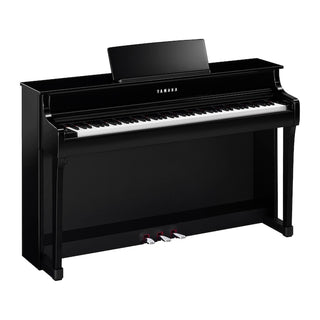
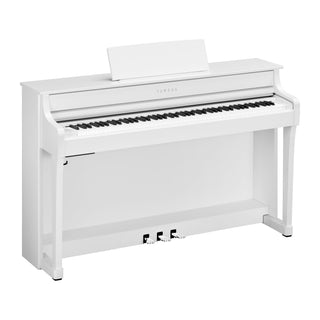
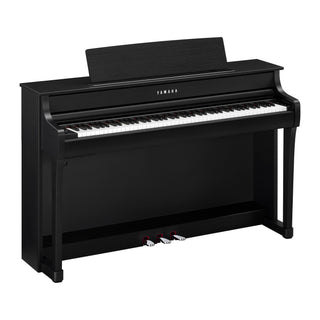
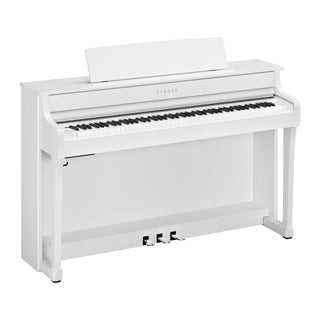
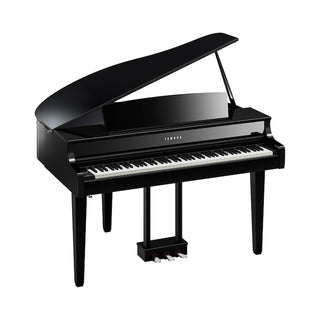
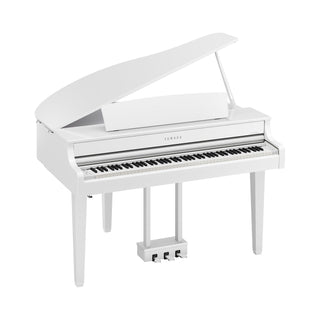
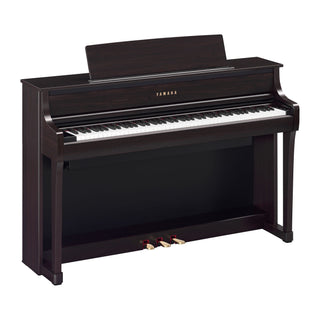
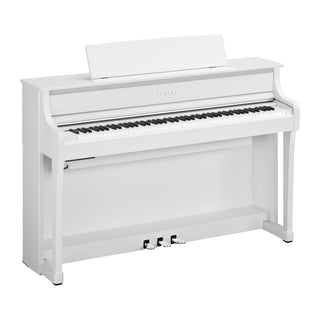
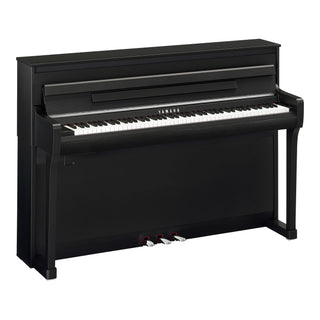
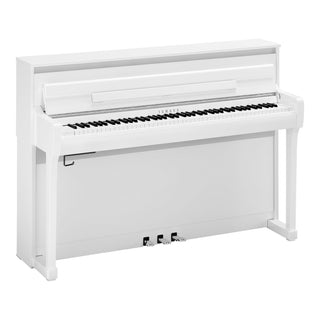
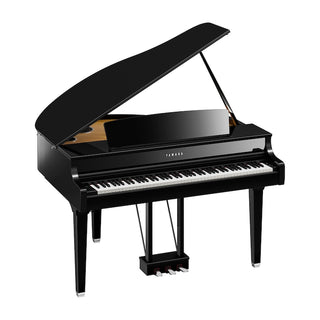
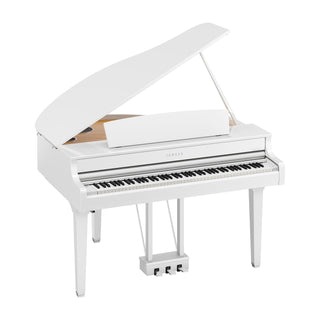
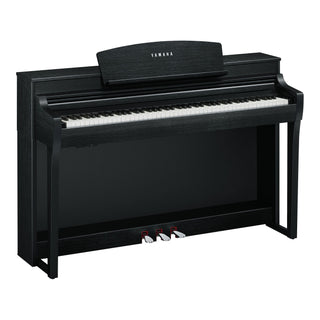
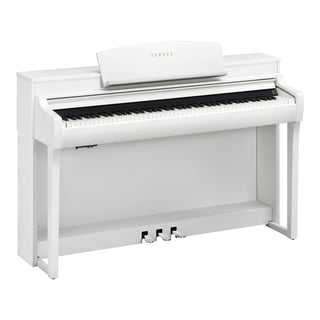
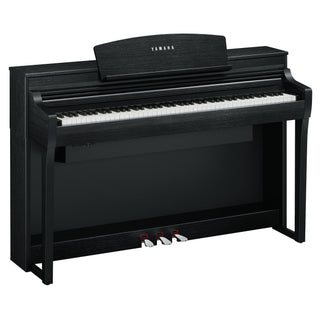
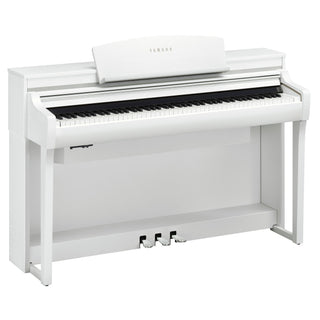
There's a conversation I see on the floor almost every week, and it usually goes something like this: a parent walks in and they've already done enough research to know they're looking at a Clavinova. They've narrowed it down between the CLP-825 and the CLP-845, and they want someone to advise them on which one to buy.
I love that question. Not because there's an obvious answer, but because the right answer actually depends on a few things worth thinking through carefully. After twenty years in this industry, I've seen families make both choices well and both choices badly. Let me give you the honest version.
What These Two Pianos Have in Common
Before we get into the differences, it's worth spending a moment on what the CLP-825 and CLP-845 share, because it's more than you might expect at these price points.
Both instruments draw from the same two sound sources: the Yamaha CFX concert grand and the Bösendorfer Imperial. Those are two of the finest concert grands in the world, and Yamaha's sampling of them is genuinely exceptional. Both models include Virtual Resonance Modeling (VRM), which simulates the way strings vibrate sympathetically inside an acoustic piano — the kind of sonic depth that makes chords feel alive rather than static. Both include binaural sampling through headphones, which is a meaningful feature for families with students who need to practice without disturbing everyone in the house.
You can explore the full Yamaha CLP Clavinova series on our site to see every model side by side.
Both also use the GH3X weighted action. We'll talk about what that means in a moment, but the point is: the gap between these two instruments is real, but it is not enormous. The CLP-825 is not a compromise instrument.
Where They Differ: The Three Things That Matter
Key Surface
The CLP-825 has smooth plastic keytops. The CLP-845 has synthetic ivory on the white keys and synthetic ebony on the black keys.
This is not cosmetic. Synthetic ivory has a slightly textured, matte surface that absorbs a small amount of moisture from your fingertips. In a Utah home in July, when the air conditioning is running and the humidity is low as it typically is along the Wasatch Front, that surface texture makes a meaningful difference in how your fingers feel over a longer practice session. It's also closer to the physical sensation of playing a traditional acoustic piano, which matters if your student is going back and forth between a lesson piano and their home instrument.
For a young child just starting out, this difference is less critical. For a student who has been playing a year or two and is developing real technique, the key surface starts to matter more than parents often expect.
Key Construction: The Wood Factor
This is the more significant upgrade. The CLP-845 uses wooden keys inside the white keys. The CLP-825 does not.
What this means in practice: wooden keys have a slightly different flex and response under hand. They don't feel dramatically different to a beginner, but as a student develops sensitivity in their touch — as they start to learn dynamic control, voicing, and what it feels like to depress a key slowly versus quickly — that internal response becomes more noticeable. Teachers who work with intermediate and advancing students often mention this. An instrument that communicates touch nuances back to the player is part of how students learn to feel what they're doing.
If your student is seven years old and just learning where middle C is, wood keys are not going to change their trajectory. If they're ten, playing for two years, and serious about continuing, the case for the CLP-845 gets stronger.
Price
The CLP-825 is approximately $2,099. The CLP-845 is approximately $3,999. That's a real difference — roughly $1,900 — and I'm not going to wave it away. For many Utah families, that gap matters. Prices are approximate; please contact us for current pricing.
If 0% financing helps that conversation, qualifying Yamaha purchases may be eligible. Contact us for current terms. And if you're still deciding between the full Clavinova lineup, our comparison of the CLP, CSP, and CVP series is a useful starting point for understanding where each line fits.
The Honest Recommendation
Here's how I actually think about this for families coming into our stores:
Choose the CLP-825 if: Your student is a beginner with under a year of lessons, is still uncertain about long-term commitment, or is genuinely young (under eight or nine). The CLP-825 is a serious instrument. It will not hold your child back. It will sound better than most acoustic pianos in its price range, and the GH3X action will teach correct finger weight and technique. Don't let anyone tell you it's a starter instrument that you'll outgrow quickly. Many students play on CLP-825-level instruments throughout their entire student years without any issue.
Choose the CLP-845 if: Your student has been playing at least a year, shows genuine interest, has a teacher who is working on technique and dynamics, and you want an instrument that has more room to grow with them. The wooden keys and synthetic ivory surfaces are real upgrades, not marketing, and they matter more as playing gets more nuanced.
There's also a third option worth mentioning here, particularly for families who want the guided learning layer built in: the CSP-255, which is priced similarly to the CLP-845 at approximately $3,999. The CSP series adds Stream Lights and app integration, which some students — especially self-motivated learners who want to explore music beyond their lesson material — find genuinely motivating. It's a different philosophy from the CLP, not a better or worse one.
A Note About Utah Homes Specifically
One thing that doesn't come up enough in online comparison articles: Utah's climate is a real factor in the instrument you choose.
If you have an acoustic piano and you've watched it go out of tune twice a year because of our dramatic humidity swings between summer and winter, you already know what I mean. Acoustic pianos in Utah require consistent humidity control and regular tuning. The CLP-825 and the CLP-845 eliminate that variable entirely. The climate in your home doesn't affect pitch stability, wood swelling, or action feel. For families in Utah Valley, in St. George, or along the Wasatch Front who don't want to manage an acoustic instrument's maintenance schedule, this is one of the most practical arguments for a Clavinova that never shows up in spec sheets.
If you're weighing whether a digital or acoustic piano makes more sense for your home, our article on digital vs. acoustic pianos in Utah goes deeper on exactly this question.
Come Try Both
There is genuinely no substitute for sitting down at these two instruments and playing them back to back. The difference in key feel between the CLP-825 and CLP-845 is subtle enough that reading about it doesn't quite capture it, but it becomes obvious the moment you put your hands on both.
We carry both models at our Murray and Orem locations. Our Orem store is especially well-suited for families coming from Provo, Lehi, American Fork, and the BYU/UVU corridor, and we're open until 8 p.m. on weeknights, which makes it easier for busy families to stop in after school or work. Our Murray store has the deepest overall Clavinova inventory, with the most experienced staff available to walk through the comparison with you in detail. And if you're coming from Washington County, our St. George location carries Clavinova inventory as well — call ahead to confirm specific model availability.
See hours, addresses, and contact information for all three stores on our Utah piano store locations page.
We've been selling pianos to Utah families for over 40 years and are one of Yamaha's Top 5 authorized dealers in the country. We're not trying to sell you the more expensive instrument if it isn't the right one for your family. Come in, bring your student if you can, and let's figure out together which one makes sense.