I should tell you upfront that I'm not a neutral party in this conversation. I grew up around pianos. My dad was a professional musician by night and worked in piano stores by day for as long as I can remember, which means I spent my childhood in piano showrooms, playing whatever early Suzuki classical pieces I could before I was tall enough to reach the upper register while sitting on the bench.
 I'm a classically trained pianist and piano teacher. I care deeply — almost irrationally — about how a piano feels and sounds. I also currently own a very old, poorly maintained Samick baby grand piano. I say that not to be self-deprecating, but because it's directly relevant to this conversation.
I was raised with a Yamaha grand piano always in the house--a polished ivory C3 in the 90's, upgrading the cabinet (but same model) to an understated satin black in the early 2000's, and finally a beautiful polished mahogany Yamaha C5 in our Eagle Mountain family home that I hoped would someday be mine (no such luck).
I would spend hours pouring my heart into my pieces, reveling in the expression and touch that only a high quality grand piano can provide. I prided myself in being the "grand finale" at my childhood piano recitals, and could never get enough of the 9-foot Yamaha CFX concert grand piano on the recital stage.
But now? Now is different. Now, when I sit down to play my piano, a pre-owned Samick baby grand that was the only used baby grand I could find on KSL in my price range as a young mother of four, it's quite a different experience. If I soften to a pianissimo, some of my keys produce no sound at all because the touch simply isn't sensitive enough. The mechanism is worn. Some keys that have been struck too hard over the years don't have the rebound to properly actuate the hammer, which means I have to get creative when I play piano when the G4 key is acting up. Imagine teaching piano students G major position without the G4 key...
For a player who has spent a lifetime developing touch sensitivity on Yamaha instruments, I cannot fully express how disorienting that is. Even though I have done my best to keep the piano regularly tuned, and even though I have a direct line to some of the piano technicians in the state to help with tone and responsiveness, there is limit to what even they can do.
All of that context is my way of saying: when I give you the honest answer about digital versus acoustic, I'm giving it to you as someone who has real skin in this game, real opinions, and real life experience with all sides of the coin.
The Case for Acoustic — And I Mean It
I'm going to make the case for acoustic pianos genuinely, because they deserve it and because I don't think you should trust anyone who dismisses acoustic instruments.
An acoustic piano produces sound through a physical chain reaction: key to hammer to string, vibrating through a soundboard, resonating through the rim and frame and lid. That interaction is mechanical, immediate, and in the hands of a skilled player, extraordinarily expressive. When you play softly on a well-regulated acoustic, there is a breathiness and an intimacy to the tone. For those quick Vivace sixteenth notes, the keyboard responds immediately as your fingers fly over the keys. When you play forte, you get a deep, resonant sound that brings the sound from the soundboard to the walls and floor of the room.
There is also a permanence and a prestige to acoustic pianos that means something. A beautiful grand piano in a living room is a statement about who you are and what you value. Acoustic pianos from quality manufacturers hold their value. They are heirlooms. My frustrations with my current baby grand piano are maintenance and age-related frustrations, but they don't make me love the idea of acoustic pianos any less.
If you have the space, the budget, and the commitment to maintain it, a quality acoustic piano — especially a quality Yamaha acoustic, which can outlast lesser brands by almost double the amount of years — is a magnificent thing to own.
The Real-World Utah Case for Digital
But here's where I, as a mother of four young children in a single income home, want to get practical, because the practical realities matter.
Utah homes vary enormously. A family in a Provo townhouse has different options than someone in a Draper rambler or a St. George retirement community. Space matters. Neighbors matter. Schedules matter.
The tuning reality
An acoustic piano typically needs to be tuned about twice a year — more often if you're serious about it or if you've just moved it. At $100–$175 per tuning in Utah, that's $200–$350 per year, every year, before you've touched anything else.
A digital piano never needs tuning. Ever. That cost difference, compounded over the life of the instrument, is not trivial.
The practice reality
I teach piano. I know what happens in homes with practicing students — practicing happens at 9pm, or during a baby's nap, or at 7am before school. Headphone practice on a digital piano is not a compromise; for many families it is the difference between practicing and not practicing.
The Yamaha Clavinova's headphone experience, with binaural sampling, is genuinely good. You hear the piano the way you'd hear it sitting inside the instrument.
The space reality
A proper upright acoustic piano requires breathing room. You ideally want several inches behind it from the wall for tone. A baby grand piano or full-sized grand, of course, takes up even more room. A digital piano needs neither of these things, functioning equally well pressed up against a wall as it would in the center of a recital hall.
The consistency reality
This is the one I feel most personally. A well-maintained Yamaha acoustic is a consistent instrument: touch it in March, touch it in September, and it responds the same way. But "well-maintained" is the operative phrase. The moment maintenance starts to slip — and it does slip, in busy families, in tight budgets, in dry Utah winters — the instrument starts to drift. Keys start to feel uneven. The voicing changes. Things that felt effortless start requiring compensation.
Here's where these points culminate to my argument for (specific) digital pianos.
When I was growing up, we had a Yamaha Clavinova in the family room for times when the main grand piano wasn't an option. My mom also taught piano lessons at the time, which meant our music room was occupied for hours a day. And separately, the "nap situation" with other members of the family meant I couldn't often play the acoustic whenever I wanted to, especially as a busy high school student who wanted nothing more than to unwind after a busy day of classes, sports, and studying with some emotional David Lanz piece. All this to say, I got to know this digital piano very well.
And if there's one thing I will say about it, besides the convenience of those headphones, is that even to my apparently very discerning tastes, a Clavinova (even 20 years ago--and they've gotten even better since then) feels, sounds, and plays the same every single time I sit down.
Where the Clavinova Closes the Gap
Thirty years ago, this conversation was much simpler. Digital pianos sounded and felt noticeably different from acoustic ones, and a serious player would always prefer acoustic. (Do you remember those glossy, slippery unweighted keys on the light, inexpensive keyboards they used to have in elementary schools?)
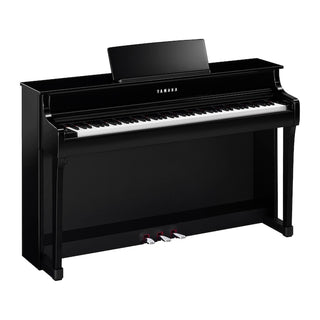
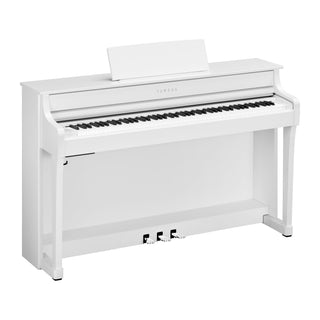
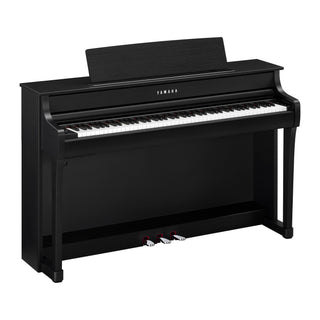
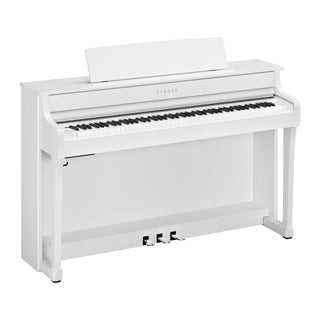
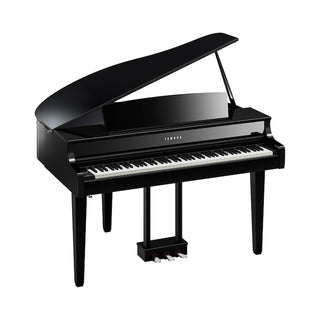
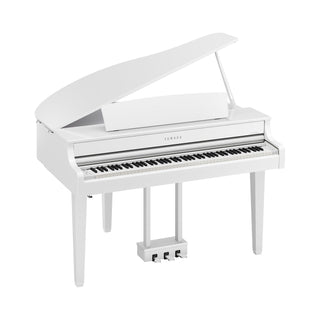
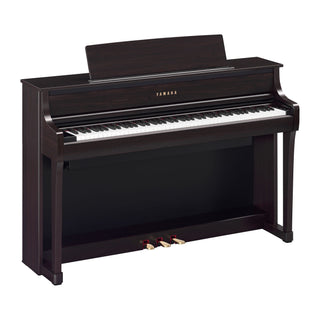
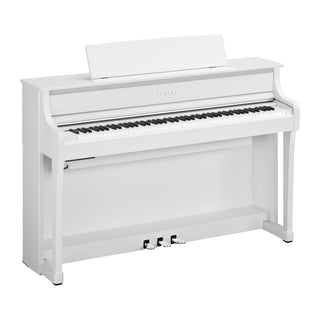
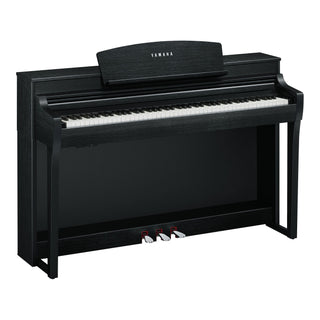
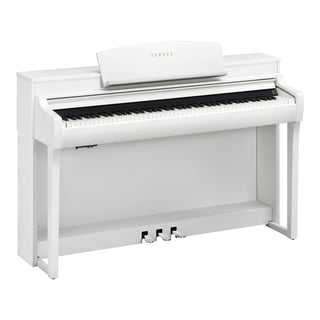
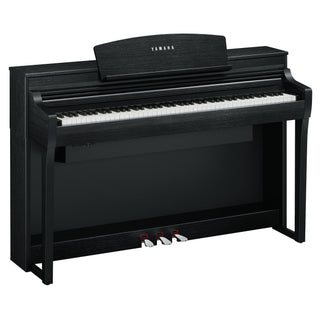
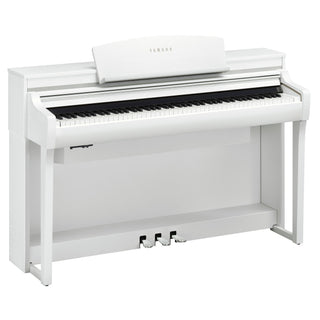
But since then, the gap has closed. And at the high end of the Yamaha Clavinova line, I would argue it has closed enough that many players, including many serious or professionally trained players, may be better served by a Clavinova than by a mid-grade acoustic.
Here's what Yamaha has built into the current Clavinova line:
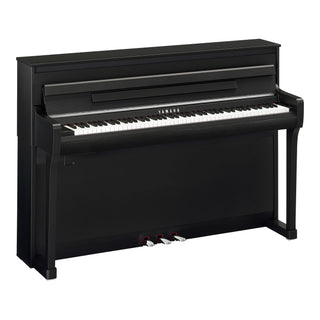
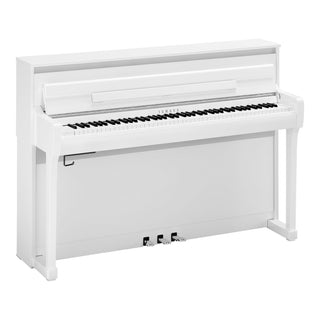
- GrandTouch key action. The upper CLP and CSP models use keys with synthetic ebony and ivory surfaces that absorb moisture the way real key materials do. The keys are made of wood, with escapement, which is the subtle "give" you feel in a grand piano action just before the hammer releases.
- Grand Expression Modeling means the instrument responds not just to the speed of your keystroke but to how you approach the key. As a pianist who cares deeply about touch, I find this genuinely impressive.
- Virtual Resonance Modeling. On an acoustic piano, when you press the sustain pedal and play a chord, the undamped strings vibrate sympathetically — you hear the piano breathing in response. VRM replicates this mathematically, and it's convincing in a way that earlier digital piano reverb algorithms simply weren't.
- Binaural sampling. Through headphones, the Clavinova uses carefully engineered stereo imaging to place the sound the way you'd actually hear it sitting at a grand piano — some frequencies coming from the left, others from the right, with the spatial quality of a real instrument. It doesn't sound like a piano coming through earbuds; it sounds like a piano.
- The soundboard speaker systems. On the upper CLP models, Yamaha has added speakers that cause the key slip and instrument body to resonate physically. You feel the bass in the bench. The piano vibrates. It's not gimmickry — it meaningfully closes the last gap between what a digital piano sounds like and what an acoustic piano feels like to play.
When I Still Recommend Acoustic
I want to be straightforward with you: there are situations where I will always point a buyer toward acoustic. If you are an advanced or professional player with the space and money for a quality Yamaha vertical grand or grand piano, have strong technical preferences and the resources to maintain an instrument properly, then a quality acoustic piano is still the reference instrument. The nuance available at the highest levels of acoustic pianism is still not fully replicated by any digital instrument, including the best Clavinovas.
If you have a family member who is drawn specifically to the physical culture of acoustic pianos, including the ritual of tuning, the mechanical beauty of the action, the resonance of wood and steel, then honor that. Instruments are emotional objects as much as functional ones. And if you have the budget for a quality Yamaha acoustic and the space and commitment to care for it, a quality Yamaha U3 upright or a Yamaha baby grand is a beautiful long-term investment.
At the Piano Gallery in Murray, Orem, and St. George, we have both acoustic and digital instruments in our showrooms, and we are genuinely happy to help you think through either path to determine the best choice specifically for you and your family.
The Hybrid Option: For People Who Can't Decide (And Shouldn't Have To)
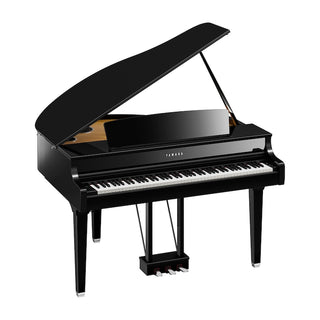
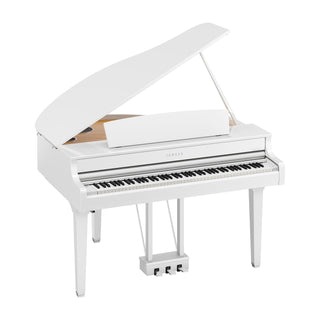
Yamaha offers a middle path that sometimes surprises people: the AvantGrand Hybrid Piano series and the Silent Piano series. The AvantGrand is a fully acoustic grand piano mechanism with real hammers, real key action, the full mechanical chain, all connected to digital sound generation rather than strings. In short, you play a real piano action; the sound comes from a speaker system.
For players who specifically want the physical sensation of an acoustic action with the flexibility of digital sound production, this is a remarkable instrument.
The Silent Piano series works differently: a traditional acoustic piano with a switch that silences the strings and activates digital sound through headphones. You own a real acoustic piano that you can also practice on silently with headphones at midnight.
For families who want the best of both worlds and can afford it, these are worth knowing about.
My Honest Recommendation for Most Utah Families
If you are a beginner or intermediate player or buying for a student in that range and you're weighing a lower-grade used acoustic piano (a nod, again, to my Samick baby grand) against a Yamaha Clavinova in a similar price range, I will almost always recommend the Clavinova. You will get a more consistent instrument, zero maintenance costs, headphone practice capability, and a key action that, at the CLP-845 level and above, is genuinely excellent.
If you're an advanced player or you have strong feelings about acoustic pianos, come into one of our stores and let's have a longer conversation. No matter which of our piano experts you talk to, they'll take the time to understand your specific preferences and circumstances to determine the best option for your budget and needs.
There's no version of this where I just tell you what to buy without understanding what you're looking for. That's been true since I walked into my first piano store as a kid. It's still true now.
Come try both sides of the comparison at Piano Gallery's locations in Murray, Orem, and St. George, Utah. We carry Yamaha acoustics, the full Clavinova digital lineup, and everything in between. No pressure — just pianos.