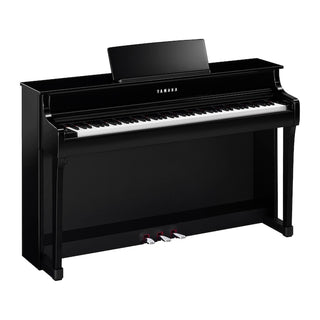
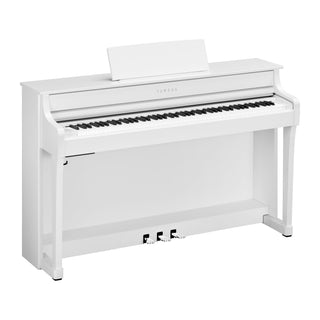
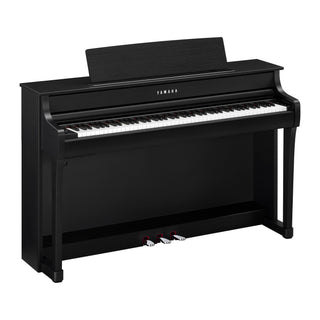
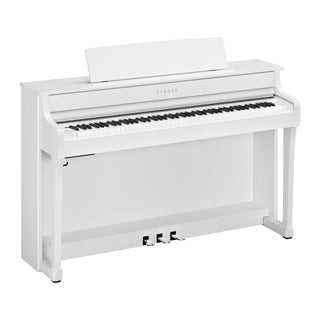
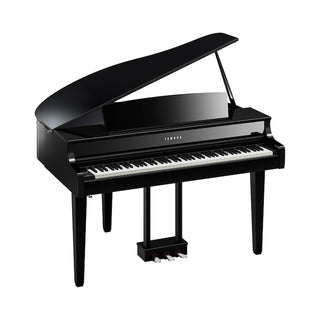
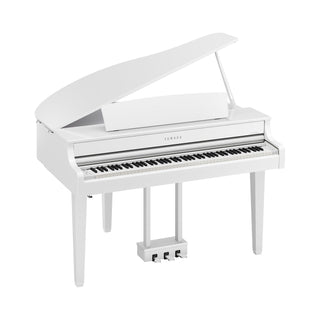
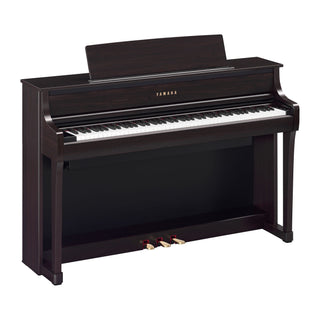
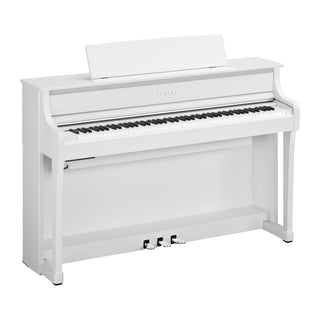
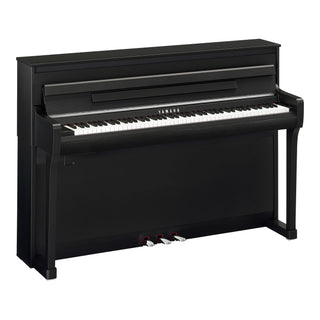
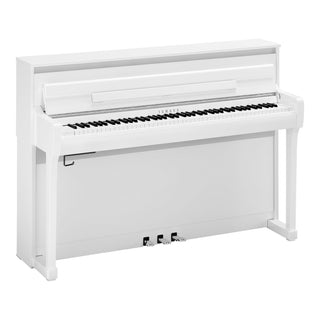
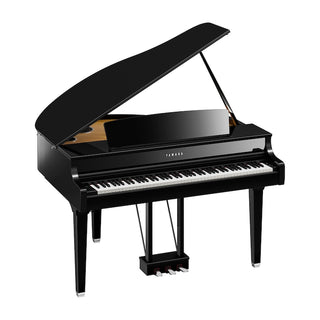
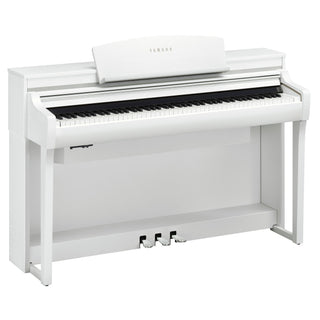
We've been asked some version of this question nearly every week for twenty years. A family walks into our showroom, sometimes with kids in tow, sometimes as empty-nesters who've been talking about "finally getting a piano" for a decade, and they've already done their homework. They know they want a Yamaha Clavinova. They've read the reviews, watched the YouTube comparisons, maybe even sat down at one at a friend's house. And then they get to our floor and realize: three series, fifteen models, prices from roughly $3,500 to well over $17,000. The question becomes, understandably, which one?
I'm going to give you the honest answer I give everyone who comes in — the same answer I'd give my own family.
First, What Every Clavinova Has in Common
Before we separate the CLP from the CSP from the CVP, it's worth understanding what you're getting regardless of which series you choose. This is not a small thing.
Every Clavinova is built around sound samples taken from two of the greatest concert grand pianos ever made: the Yamaha CFX and the Bösendorfer Imperial. These are instruments that professional concert pianists play on world-class stages. When you sit down at a Clavinova, that is the tonal foundation you're working with.
Every Clavinova also comes in a proper furniture cabinet — not a keyboard stand, not a plastic housing, but a real piece of furniture that you aren't embarrassed to have in your home. These are instruments that belong in a living room. They come with a matching padded bench and a five-year in-home factory warranty. And every model across all three series features weighted, graded keys: heavier in the bass, lighter in the treble, exactly the way an acoustic piano behaves.
That last point matters more than most buyers realize, and I'll come back to it.
The CLP Series: For the Player Who Wants the "Digital" Part of the Piano to Disappear
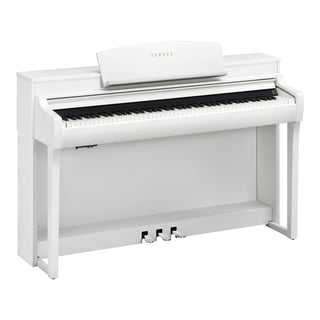
The CLP Clavinova Piano series has been around since 1985, and it's the one I personally love most. The philosophy behind it is simple: the "technical stuff" gets out of the way and let you play.
There are no touchscreens. No LED lights. No auto-accompaniment. What you get, depending on the model, is an increasingly sophisticated recreation of what it actually feels like and sounds like to sit at a grand piano. The higher you go in the lineup, the more Yamaha has eliminated the gap between digital and acoustic pianos, to the point where even concert pianists enjoy playing the Clavinova CLP.
The entry point, the Yamaha Clavinova CLP-835 digital piano, starts at around $3,499 and is genuinely remarkable for the price. You get the CFX and Bösendorfer samples, Virtual Resonance Modeling (which replicates how strings sympathetically vibrate when you play), and Bluetooth connectivity. The key action is Yamaha's GH3X, which, while not the patented Yamaha GrandTouch that makes it so you can close your eyes end genuinely wonder whether you're playing a grand or digital piano, but it's very good.
The Yamaha Clavinvoa CLP-845 steps up to a GrandTouch-S action with textured keytops that absorb moisture from your fingers the way real ivory does (and how the really good synthetic ivory does on high quality grand pianos now). If you've ever played a quality acoustic grand piano for a long time and then switched to glossy plastic keys, you know why this matters.
The GrandTouch keys also respond to how you press a key, not just how hard, which is what Yamaha calls Grand Expression Modeling. This is a key difference between a digital piano that sounds like a piano and one that responds like one.
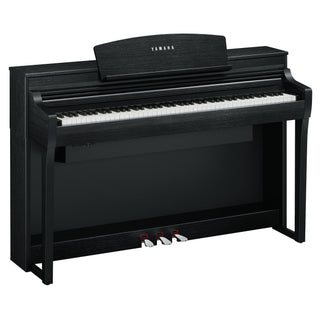
At the top of the upright CLP Clavinova line, the Yamaha CLP-885 adds a resonance speaker system that vibrates the key slip and panel so the entire instrument body hums the way a real acoustic does. You feel the piano, not just hear it.
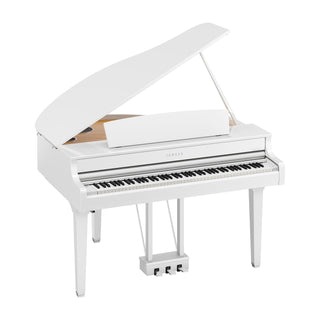
 And then there are the CLP-865GP and CLP-895GP which are built into beautiful grand piano-style cabinets. The sound projection, the lid, the visual presence. For players who want the full acoustic grand experience without acoustic grand maintenance, these are extraordinary instruments.
Who is the CLP Clavinova Line for?
The Yamaha Clavinova CLP digital piano line is for anyone who wants to play the piano. Period. Students, returning adults, serious hobbyists, advanced players. If what you want is to sit down, play, and forget you're playing a digital instrument, start here.
The CSP Series: For the Learner Who Wants Technology on Their Side
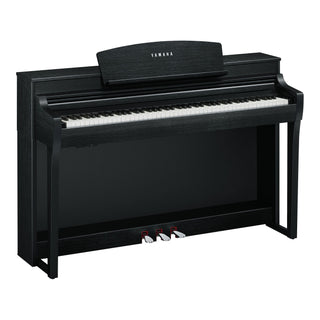
The CSP Clavinova Smart Piano is where Yamaha added a layer of intelligent interactivity to the CLP digital piano experience. From the outside, a CSP looks nearly identical to a CLP: same cabinet, same clean lines. The difference reveals itself when you connect it to the Smart Pianist app on a tablet or smartphone.
 The headline feature of the CSP is Stream Lights: a row of LED lights positioned above the keys that illuminate in sync with the music, telling you exactly which key to press and when. If you've seen Guitar Hero, you understand the concept. It's that, but for piano, and it's far more musical than it sounds. For self-learners or families with younger students who aren't yet working with a teacher, it dramatically lowers the barrier to actually making music.
But Stream Lights are just the beginning. The CSP also gives you a massive library of songs you can play along with, a microphone input with vocal harmony processing, and access to a large library of voices and accompaniment styles that push toward CVP territory. The current CSP-255 starts around $4,499 and the CSP-295GP — the grand cabinet version — takes everything to another level entirely.
The CSP's key action is excellent. It uses the same GrandTouch-S action as the upper CLP models, and it sounds just as beautiful. If your goal is to learn piano and you want every technological advantage available to you, the CSP is a genuinely wonderful instrument. However, it's worth truly considering whether you'll actually use the interactive features. For some classically trained pianists like myself, the features would be wasted. For beginners or families with multiple children learning how to play, the features may have a much longer use-life.
Who the CSP is for:
Self-motivated learners of any age, families who want guided practice tools, anyone who loves the idea of singing along while they play, or players who want the CLP experience with a much larger library of sounds and accompaniment styles.
The CVP Series: For the Entertainer and the Arranger
The CVP, which stands for Clavinova Versatile Piano, is a different kind of instrument entirely. It's not trying to be a piano that happens to have some digital features; it's a full music production center that happens to have an extraordinary piano inside it.
A CVP gives you over 1,000 instrument voices and hundreds of accompaniment styles (including jazz ensembles, orchestras, country bands, Latin rhythms, and more) that respond in real time to what you're playing. You can literally play three chords in the left hand and have a full band following you.
The CVP is genuinely impressive, and for someone who loves arranging, composes music, experiments with sound, creates music for entertainment or commercial purposes, or who has always wished they could conduct their own orchestra from a piano bench, it is a spectacular instrument.
The current lineup starts with the CVP-905 (which is currently on sale on our site for 15% off) and goes up to the CVP-909GP, which is as close to an all-in-one music performance studio as you're going to find in a home instrument.
We sell CVPs to online musical influencers, professional and early-career musicians, composers or musical artists, and even retired musicians who spent years playing in bands and want to recreate that experience at home.
Who the CVP is for:
Players who want to make full arrangements, entertainers, anyone who's always wanted to lead a band from their living room, and players who prioritize creative versatility.
The Decision: Four Questions to Ask Yourself About Which Yamaha Clavinova to Buy
After decades of these conversations, we've found four questions that cut through the noise:
- Why are you buying this piano? If the answer is "to play piano," then you'll be happy with a Yamaha CLP. If it's "to learn with guided tools," then go with the CSP. If it's "to make music, experiment, and create," then you'll love the CVP.
- How important is touch realism to you? The CLP line, especially mid-range and above, offers the most refined key action. If you're a trained player or have strong opinions about how a piano feels, weight your decision heavily toward the CLP.
- What's your realistic budget? The jump from a CLP-825 to a CLP-845 is much more significant in feel and long-term satisfaction than it is actual price tag. Same for the CSP-255 to the CSP-275. If you're between two models, I almost always recommend stretching to the higher one. You'll live with this instrument for a long time.
- Who else in the house is going to use the piano? A dedicated adult student has different needs than a household with three kids at different levels. The CSP's guided features are genuinely useful for families. The CLP is the better long-term instrument for serious players.
Come Hear the Difference Yourself
There is genuinely no substitute for sitting down at these instruments. The difference between a CLP-825 and a CLP-845 is something I can describe to you all day, but the moment your hands touch those GrandTouch keys, you'll understand it immediately.
All three of our Utah locations — Murray, Orem, and St. George — carry the full Clavinova lineup.
Come in. Play them. Bring your favorite piece if you have one. We'll take it from there.