Just the other day, I had a neighbor come over to help me weed my yard (I know – I have the best neighbors). As she and I were chatting, she mentioned she had made a commitment to herself to start playing piano again. She played as a child, but it got lost during the raising-a-family years. Now that the kids are grown, she's ready to pick back up the hobby she loved.
Naturally, my response was "That's great! What kind of piano do you have?" Her answer was that they just got "a little keyboard" to practice on. This can mean a lot of things.
For people new to pianos, it can feel like keyboards and digital pianos are the same instrument at different price points. Digital pianos are often looped into the term "keyboard" by inexperienced players, and keyboards can be anything from a mini 37-key tabletop keyboard with unweighted keys to an 88-key keyboard with weighted keys and a sustain pedal. Digital pianos, however, have distinct differences. In reality, they are two different instruments with separate uses.
While both instruments share similarities, they also have distinct characteristics that cater to different musical needs and preferences. In this blog post, we’ll explore these differences to help you make an informed decision.
What Makes a Keyboard a Keyboard
The inexpensive portable keyboards — the ones at the top of an Amazon search — are designed for convenience and cost. The keys are unweighted, meaning they have no resistance when you press down on the key and quickly return to position. There is no relationship between how hard or soft you press the key and how it depresses or releases. These keyboards also have fewer keys than a piano, with anywhere from 37 keys to 61 keys (compared to 88 in a full-sized piano), and rarely include pedals.
As you move up the price points, you'll start seeing keyboards with 61 to 88 keys and descriptions like "touch-sensitive" or "semi-weighted keys." These terms mean the keys are semi-weighted, or have some resistance when pressing the keys. These keyboards may also have pedals that attach via a cord, and will start having more features like recording, tones, rhythms, and other functions.
Finally, you'll see the more expensive professional keyboards with 88 keys, graded hammer action, and terms like "music synthesizer" and "digital arranger." These are the types of keyboards you see on stage with professional bands or in music studios and workstations of songwriters and digital composers.
Keyboards are identifiable by the following features:
- Digital Function: Keyboards are always digital, meaning the sounds they produce are synthesized by "sampling," which means the sounds are recorded from other instruments and reproduced when the keys press down to hit nodes that produce the sound through speakers or headphones.
- Portable: Keyboards are not built into stands; they often have temporary stands that the keyboard can rest on, or they can be placed on a tabletop or work station.
- Variable Number of Keys: Keyboards have a range of keys from 31 to 88 depending on their size.
- Light Keys and Varying Spring Action: Keys on keyboards are glossy, light, and thin. They can range from having no resistance when you depress the keys, can be lightly sprung which provides slight resistance, or can have simulated graded action, which provides a more dynamic touch.
- No Pedals or One Pedal: The less expensive keyboards will not have any pedals at all. Higher-quality models may have a pedal that attaches via a cord and simulates sustain (when the sound extends even after the key has been released).
What are Keyboards Best For
The use of keyboards typically fall into two categories: toys or professional tools. Small, portable, limited-key keyboards are more closely related to toys than to an actual instrument. They can be used by children or beginner hobbyists to play around with different sounds and songs. Professional keyboards are versatile tools known for their wide range of sounds and features, and are used to synthesize music for songwriters and musicians. These are favored for their portability, adaptability to various musical contexts, and features to support production of music in multiple musical genres and styles.
There are legitimate uses for keyboards, but the most important thing new players or parents of new students should know is that keyboards are rarely a good fit for pianists. This, surprisingly, isn't because of the missing range (number of keys). It has more to do with the unweighted action. Piano technique is built on the relationship between finger weight, key resistance, and sound production. When a student practices on unweighted or semi-weighted keys, their fingers learn to skim, not to press. The habits that unweighted keys form aren't neutral — they actively conflict with proper technique.
What Makes a Digital Piano Different from a Keyboard
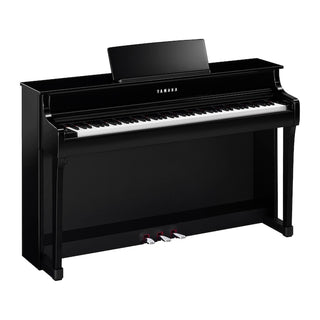
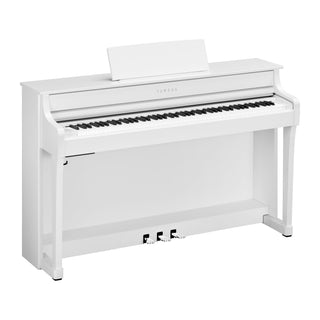
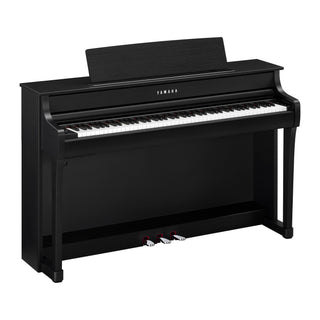
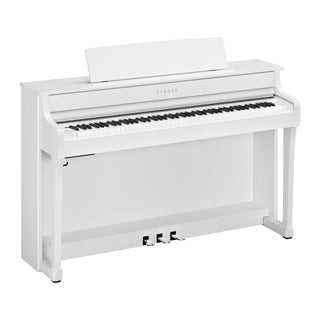
A true digital piano is built to replicate the experience of playing an acoustic piano as closely as possible, starting with the action. Weighted keys use hammer mechanisms, and on better models, those mechanisms are graded, which means they are heavier in the bass (low notes) and lighter in the treble (high notes), just like an acoustic piano. The best digital pianos add escapement simulation, the slight tactile notch you feel when a grand piano's hammer releases the string. It changes how your fingers interact with the instrument, and over time, it shapes technique.
A full 88-key range is standard on digital pianos. Sound quality is also a meaningful step up, with better models using multi-layered samples recorded from concert grand pianos, along with acoustic resonance modeling that simulates how a piano's soundboard, strings, and cabinet interact.
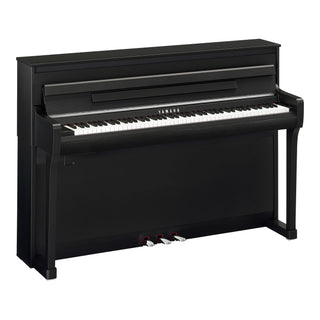
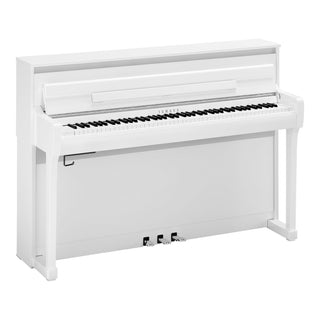
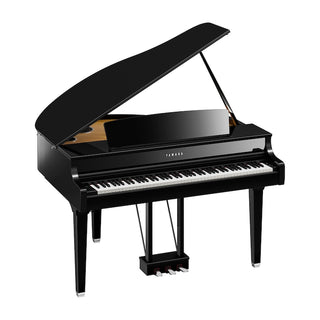
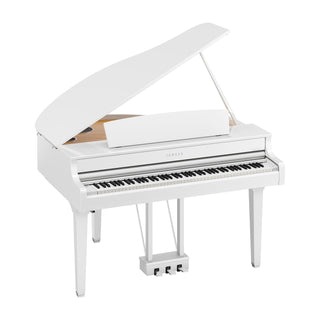
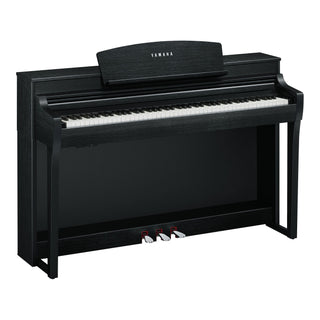
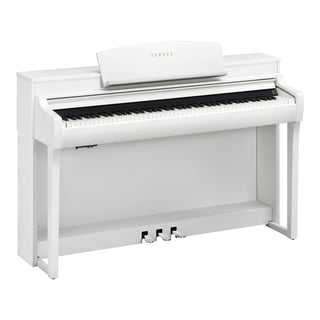
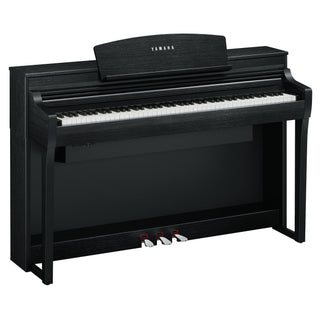
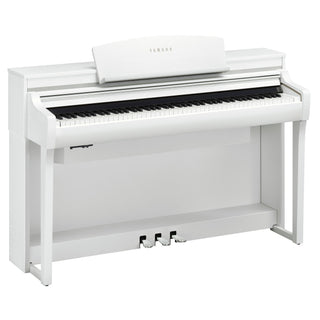
Digital pianos are furniture-grade instruments meant to live in one place. They're not gig instruments; they're practice and performance instruments designed to build real piano skills.
1. Key Action
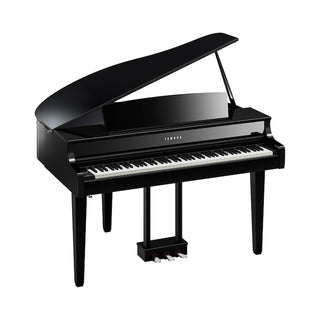
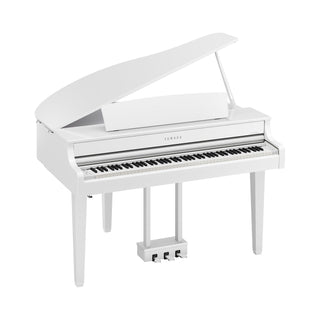
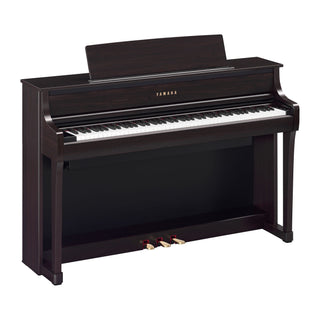
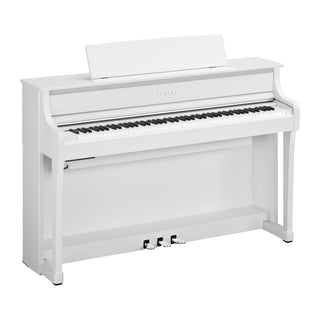
Key action refers to how the keys on the instrument respond to touch and how closely they mimic the feel of an acoustic piano. Modern quality digital pianos are designed with weighted, though some lower quality digital pianos have semi-weighted keys. Weighted keys replicate the resistance and feel of traditional piano keys. Technologies such as the Yamaha GrandTouch™ with 88-key linear graded hammers, such as that found on the Yamaha CLP-845 have such a realistic touch and feel that pianists can play with the same nuanced expression as with a high-quality grand piano.
Keyboards usually have non-weighted or semi-weighted keys that are easier to play quickly but lack the authentic piano touch. For pianists, even beginners or early learners, a digital piano with fully-weighted keys is the better choice.
2. Sound Quality and Authenticity
Another difference between a digital piano and lower-quality keyboards (professional keyboards excluded from this generalization) is the sound quality and authenticity. Digital pianos are designed to closely replicate the sound of an acoustic piano. They often use advanced sampling technology to capture the nuances of a true acoustic piano, including the variations in tone and dynamics. This results in a more authentic and expressive piano sound.
This is most notable in high-quality digital pianos, such as the Yamaha Clavinova CVP-905, which features nuanced sound sampling from two of the top concert grand pianos worldwide, the Yamaha CFX and Bösendorfer Imperial.
Digital pianos will also offer additional instrument sounds, and in higher quality digital pianos, these sounds will have phenomenally detailed nuances such as breath sounds in wind instruments.
Keyboards, on the other hand, prioritize versatility and portability over sound authenticity. While they can produce piano sounds, they put just as equal a focus on additional instrument sounds, including synthesizers, strings, and more. The piano sound on a keyboard rarely be as rich or realistic as that of a digital piano.
3. Number of Keys
Another significant difference between digital pianos and keyboards is the number of keys. Digital pianos typically have a full 88-key keyboard, matching the standard size of an acoustic piano. This is essential for those who want to practice classical piano pieces or develop their piano skills.
Keyboards come in various sizes, but many have fewer than 88 keys, making them more compact and portable. This is ideal for musicians who need a versatile instrument for live performances, studio work, or music production.
4. Portability
Portability is a key consideration when choosing between a keyboard and a digital piano. Keyboards are generally lighter and more compact, making them easy to transport and suitable for musicians on the go. They are a popular choice for gigging musicians and those with limited space at home.
Digital pianos, while still movable, are heavier and bulkier due to their authentic piano-like cabinets. They are better suited for stationary use in a home, apartment, or studio environment.
5. Price
Lower-level keyboards tend to be more affordable than digital pianos, making them a more accessible option for those with limited funds. This can be a fine choice for music hobbyists writing or mixing songs in a variety of genres. Digital pianos, with their higher-quality sound and key action, are usually more expensive, and are more suitable for those focused on specifically playing the piano.
The Action Is the Deciding Factor
I want to spend a moment on action, because this is where most families focus on the wrong specification. For many people new to the piano or for parents looking for an option for their children, price is the first consideration, with features such as "play by lights" or song libraries being intriguing perks. However, those things matter less than how the keys feel under your or your child's fingers during practice sessions.
Yamaha is the gold standard in the touch and tone of a digital piano. With world-renowned acoustic pianos and orchestral instruments, Yamaha takes pride in emulating the true sound and playing quality of their top concert grands.
Yamaha's Clavinova Digital Pianos offers three different action grades across its lineup:
GrandTouch-S™
CSP-255 | CSP-275 (Wooden Keys) | CLP-825 | CLP-835 | CLP-845 | CLP-865GP
GrandTouch-S™ was designed with the key mechanism and weight of an acoustic piano in mind. Acoustic piano keys move lightly when played softly and respond firmly when played strongly. The GrandTouch-S™ simulates this range of differences in key touch between lighter and harder playing, meaning the fingers naturally sense the difference between producing louder and quieter sounds. Because the keystroke is more authentic, students develop the finger strength and responsive feeling to playing that they would lack if practicing on a keyboard.
GrandTouch™ with Counterweights
CSP-295GP | CSP-295 | CSP-255 | CLP-875
The GrandTouch™ has a longer pivot point than the GrandTouch-S™, which better matches the feel of an acoustic grand piano, making it easier and more uniform to play near the back of the keys. Another difference of the GrandTouch™ is that the keys are made of solid natural wood with synthetic ivory/ebony keytops, whereas the GrandTouch-S™ is usually laminated wood core or plastic, depending on the model.
The counterweights are a notable addition to the GrandTouch™. Acoustic pianos typically have counterweights embedded in the keys, which help to better control the heft of the hammers. This means better response when playing rapid songs and better control in softer songs (piannisimo).
GrandTouch™ with Counterweights and Escapement
CLP-885 | CLP-895GP | CVP-909GP | CVP-909 | CVP-905 | CVP-809GP | CVP-809
The GrandTouch™ with Counterweights and Escapement includes the GrandTouch™ and counterweight benefits above, with escapement added. On an acoustic piano, a mechanical design called "escapement" makes the hammer bounce away from the strings instantly after they are hit so it can vibrate freely. This feels like a slight notch or pressure bump in the key movement, which is recreated in GrandTouch-S™ with escapement, which is especially felt when playing softly, better mimicking the true touch of an acoustic grand piano.
A Conversation About Acoustic Pianos
Despite the nuanced enhancements Yamaha provides in its Yamaha Clavinovas, there are still things an acoustic piano still does that no digital fully replicates. The resonance of strings responding to other strings, the physical vibration of a soundboard under your hands, the way the room itself becomes part of the sound — none of that exists in a digital instrument. If you or your child is highly serious about classical study and you have the space and budget for a quality upright, Yamaha's acoustic upright line deserves a look alongside the Clavinova options.
Utah's climate adds a practical consideration here. We have some of the lowest relative humidity in the country, particularly in the winter when home heating drops indoor humidity significantly. Acoustic pianos require regular tuning in this environment, while a digital piano does not. For families who want a lower-maintenance instrument that will still build genuine technique, the Clavinova is a strong answer.
Quick Reference: Keyboard vs. Digital Piano
Before you make a decision, these are the categories that actually separate the two instrument types:
- Key action: Unweighted (keyboard) vs. weighted, graded, hammer-action (digital piano)
- Key count: Typically 61 keys (keyboard) vs. 88 keys (digital piano)
- Sound quality: Simple synthesis (keyboard) vs. multi-layered concert grand samples with acoustic resonance modeling (digital piano)
- Technique development: Keyboards can form habits that conflict with piano technique; digital pianos are designed to support it
- Intended use: Keyboards are portable and versatile; digital pianos are built for piano study and performance
Final Thoughts
Choosing between a keyboard and a digital piano ultimately depends on your musical goals, preferences, and budget. For pianists looking for an instrument that closely replicates the look, feel, and sound of an acoustic piano, a digital piano provides a much better replication of these qualities than a keyboard does. On the other hand, for versatility, portability, and affordability, a keyboard might be a better fit.
This article was originally published in August 2023 and was reviewed and updated in July 2026 for more complete and relevant information.